Categories
Productivity Booster

4 Keys to The Art of Blogging

This is the second of two posts on the Art and Science of Blogging, a series created to run as part of #blogchat You can check out part 1, “4 Keys to The Science of Blogging” here.

We had to cover the Science of blogging first because that’s where all the rules get made. Now we get to talk about Art, where the rules can be broken – for example, this series should be “The Science and Art of Blogging” since that’s the order we are covering it, but “The Art and Science of Blogging” is more pleasant to the ear, so we had to get crazy and take them out of order.

According to dictionary.com Art is “the quality, production, expression, or realm, according to aesthetic principles, of what is beautiful, appealing, or of more than ordinary significance”

So where to focus to make our blogging “of more than ordinary significance”?

The Art of Creating Experience

We touched on this last week when we talked about “Creating a System.” Think about what your readers are going to do, where they are going to go when they visit your site. Create a “Happy Path” for them. What would be best for both you and them to experience? At the heart of this is asking why you are blogging. Is it just to tell your story, or do you want to motivate your audience, enthuse them or teach them?

The two keys here are to wireframe – actually draw a map before you start building, and testing. Having a map and then getting 3rd party verification that everything works are the only ways to prove the park ride is working.

The Art of Web Design

Choosing the proper colors, fonts, and page layouts require an artistic eye. There are many rules of design that can help you make your site more effective but ultimately you are painting a picture. Unfortunately for us it’s going to render differently on all kinds of devices making this infinitely more challenging than a canvas.

Your site is the user interface (UI) to your content. The ultimate goal of UI would be that it is intuitive – when someone sits down at your site for the first time, everything does what the user thinks it should do. Of course our expectations of a UI are always in motion. Until recently I would always expect a keyboard and mouse. My son it tapping and swiping on the TV and getting angry that nothing’s happening. The ultimate artistry here is creating the new standards for interface elements. What will we do to control our iWatches? Motions to control holographic interfaces? Those controlled by eye or voice?

Keys here – use complementary colors, put readability first in font choice, in layout always err on the side of less (simplicity reigns). For UI – steal from the masters.

The Art of Images

Unless you’re running something like a photo or travel blog, images are not required. And yet the right images can clearly make a blog a piece of art, while poor or dated graphics may cause some to look on your content with a doubtful eye. Can I really trust this information that looks like it was written in 1998?

It’s funny how most blog templates try to fool you by going with a “Less is More” layout. That does work really well if you have some National Geographic level photos, suddenly when you start slapping in your own images the template doesn’t seem so cool. The good news is you can release plenty of photography smack down with just an iPhone and a little work.Mona_Lisa

Quick tricks to improve your images: Understand the Rule of Thirds, use black and white for drama and to hide imperfections. Get at least a basic understanding of Photoshop, or GIMP if you don’t want to pay anything. The greatest productivity boost to my blogging (and marketing career overall) was to learn Photoshop. Other photo tricks with high bang for your learning buck: HDR and adding sharpness.

The Art of Writing

We end here with the greatest challenge the blogger and author have always faced: the blank page. Writing compelling copy is the blogger’s core competence. In truth, you could find someone to do every other part of this process but it’s the writing that’s your fingerprint, your stamp on the project that nobody else can replicate.

I do not put myself forth as a writing expert (for the love of god, I was trained as an economist, many consider that being a professional liar), but as a marketer there are some tricks you can use to improve how you write:

Start with your own voice. Write as if you were talking, there’s never been anyone that’s suffered from “Talker’s Block”. If you’re stuck just keep writing, you’ll get something good on the page and even if it’s just one sentence out of two pages, that’s enough to make your next session productive.

Use the proper voice for the situation. The voice you choose will set the scene. I love Lawrence Fishburne’s character in “The Matrix”. Although it’s a Sci-Fi action rollercoaster ride his voice is slow and deliberate, a rich deep tone with perfect elocution. Here is art in action. By breaking the rules with this voice in that scene you can’t help but be enraptured.  So ask “Does the voice I’m using match the scenery in my blog? Should it?”

The masters that I have been fortunate enough to work with in marketing have all had the same technique – use the active voice, and cut out half the words that are not really providing any value. It can never be too succinct or clean. Check out writing from the King of the Mad Men, David Ogilvy for more here.

To read more about practicing your art in today’s society you might want to check out this interview with Seth Godin. If you enjoy listening to audio, the interview is here.

Finally, thanks for taking part in #blogchat with me and I hope you’ve found our discussion useful. The audio edition of my book, Marketing Confessions, was just released this week. I’ve created a pdf of a few sample chapters for everyone from blogchat if you’d like to check it out or pass it along to your favorite marketing person.

Thanks,
@johnjwall

Categories
Productivity Booster

Audio Confessions!

B2BMarkConfes copyB2B Marketing Confessions is now available as an audiobook! I know it’s absurd that a guy with a podcast needs a year to get the audio version of his book done, but that’s how the chips fell.

The blurb: What’s the Truth About Marketing? Contrary to the popular belief that marketing is advertising, listen to the confessions of an insider to learn how marketing affects every step of the customer lifecycle. From product design, to building awarness, selling, and keeping customers happy, this book covers all the basic principles and gives you tactics, tips and tricks to succeed (including best practices for Salesforce.com)!

Reviews:
Star Rating: 4.5 out of 5 – San Francisco Book Review

“…one of the many wonderful things about B2B Marketing Confessions: it is accessible and useful to everyone.”
B2B Marketing Confessions is exceptional. Wall describes everything you could ever want to know about the modern-day marketing process. Whether you are a professional marketer or an entrepreneur with a big idea and no employees (yet), you should read this book. I have no doubt that you will find Wall’s advice easy to understand and exciting to put to use.”

Available at:

Amazon (via Audible)

iTunes

Audible (Get it free if you start a 30 day trial)

Dead tree and Kindle versions here

I’m working hard to promote it this month so if you are looking for an interview subject, webinar host or presenter, or speaker I’m ready for your group, association or nursing home!


Categories
Productivity Booster

4 Keys to The Science of Blogging

This Week (Sunday, March 9, 9pm EST) in Mack Collier’s #blogchat we’ll be talking about “The Art and Science of Blogging.” Blogging covers a huge spectrum of skills, everything from configuring your servers and domain name to web analytics, to coming up with the graphic design and color scheme for your blog (but thankfully, it’s easy to outsource or use tools for all of this). If you have time left after all that, you may even do some writing.

I use the word “Science” simply to emphasize experimentation and (hopefully) repeatable results. For our purposes we can use the experiments other people have done to make our blogs better.

Week 2 will cover the “Art” side of the discussion. That part is more fun than science but there’s a reason why you have to put science first, and that will a big part of the second week’s discussion. Although you can steal all the scientific results for your own gain, once you start stealing someone else’s art you become a cheap knockoff.

The Keys:

  1. Follow “The Rules”
  2. Build the System
  3. Measure Everything
  4. Always Be Testing/Closing/Selling

Follow “The Rules” As you begin your study of blogging you will look to “The Rules” to guide you and keep you from getting in your own way. For example, in the past you didn’t have to think much about how your blog would look on a phone but with the huge explosion of handheld devices, it’s not uncommon to hear of sites having more than half of their traffic coming from mobile. In other words – if you tune your blog so it also looks great on mobile platforms, you could double your current results. We don’t need to spend much time here, you’re smart enough to be hanging out in #blogchat so you get this.

Build the System There’s no substitute for climbing the learning curve. You’ll probably never learn as much about blogging in as short a time as when you get your blog together and do your first 10 posts. An important point to remember here is that your blog is unique. You want it to be remarkable.

Once your blog is up and running ask: “Are you treating your readers right?” To maximize your odds for success make sure your readers can easily do what they want to do, and they have a great experience when they visit your blog. It astounds me how many great blogs don’t have  links to their most popular posts. For many blogs the best meat is buried where only Google can find it. Yet out of the other side of my mouth, while this mission has been accomplished over at Marketing Over Coffee, this blog doesn’t have an easy to use archive or Top 10 page (cobbler’s kids and all that, yadda yadda.)

Bonus links: Additional Reading on User Interfaces (UI), and User Experience (UX)

Measure Everything –  We could talk for days about Google Analytics. Maybe we can at least get through the 3 key areas in our hour together:

  1. Acquisition – where do your site visitors come from? More importantly what could you do to find more of them?
  2. Behavior –  what do users do when they get to your site?
  3. Conversion- the critical point that separates the general audience from customers, for lack of a better term.

Google analytics gives you the data to fuel your experiments and gives you hooks into other advertising options and systems at the right price. Check out this post from Christopher S. Penn for more on the ABC’s.microscope

Additional Reading: The Godfather in this space is Avinash Kaushik, and he’s given us a clear map of the path to awesomeness. Learn the path, live the path, love the path. He offers 2 ladders, the first outlining what to do to make a killer web presence, and the other outlining what to measure.

Always Be Testing/Closing/Selling – There are two sides to this coin – one is that you should always be testing something, tweaking things to see what kind of trouble you can cause. On the other hand – you always have to be wary that it’s not cutting into your writing time. It may help to set a goal “I will test one variable a week” just to keep you from running amok (maybe one more post rather than a Blackberry template?)

Additional Reading:  If you are into coding check out the Google Analytics API for some crazy stuff you can do on the testing front.

Does this make sense? Have you got any theories you’ve proven or want to test? I’d love to hear from you this Sunday, March 9 on #blogchat my twitter name is @johnjwall see you then!

Categories
Productivity Booster

Doing Business in Asia

Here’s the discussion with Derek Sivers, if you’d rather listen you can get the podcast here.

John:  Hello, everyone. We have a great interview today with Derek Sivers, author of a number of books on doing business in the Far East. You may know him as the man behind CD Baby. He was on last in 2011 when he had done a book for The Domino Project called “Anything You Want.” We had discussed what went into that project, but he’s had a whole bunch of stuff since we talked to him last.

Derek, welcome aboard. Thanks for talking with us.

Derek:  Thanks, John. I can’t believe it was 2011. It feels like it was maybe a year ago. You’re right. It’s been a while now.

John:  The great thing is that your blog is active. You have a ton of people who follow you and everything over there, so I was able to go in and read what’s been going on. First, let’s get you caught up before we jump into the Wooden Egg Project and what this is all about.

When we last talked, you were in Singapore and now you’re in New Zealand. I’ll have a link to the post you have about that, but tell us a little about how that all came about.

Derek:  Sure. To back up a bit, I’m so American. I was born in California and I’ve lived in California, Chicago, Boston, New York City, Woodstock, Portland, Santa Monica, and I almost moved to Texas until I realized that America had become kind of like my glass jar – like I was a fly bouncing around inside the jar and I needed to lift off the lid and go out into the rest of the world.

That was a few years ago when I gave myself a personal challenge to live outside of the U.S. for the next 40 years because it was around my 40th birthday. I figured I’d spent the first 40 years of my life inside the U.S., so I’d challenge myself to spend my next 40 outside the U.S. That’s about the time I met my wife. We got married and went around the world to look for a new country to call home. We landed in Singapore and really loved it. We filled out a ton of paperwork – visa and immigration stuff – and I became a permanent resident of Singapore.

I really thought we were going to spend the rest of our lives there, but then we had a baby. Singapore is an awesome city. I love it, but for a baby, I still have this thing where I think babies/kids should grow up outside in nature. That’s one of the few things that Singapore lacks, so instead we picked another place on the map and moved to New Zealand, mostly just as a good place to raise a kid, and I also realized that I needed a lot more time to focus internally instead of externally, if you know what I mean.sivers-350x250

John:  Right. With this Wooden Egg Project that you’re doing, you came out with a series of 16 books back in 2013 covering a whole ton of countries over in that part of the world, and now in 2014, all of them have been updated. They’re massive books. I look at this pile and I think, “Why the hell did you drop 16 books at once?” So tell us about this. Give us the sketch here.

Derek:  Imagine you moved to a part world that you knew nothing about. I never lived in Asia before. Here I am living in Singapore. I really know nothing about it. I know nothing about Indonesia and I’m right next to it. I could literally see Indonesia out of my window of my apartment, but I knew nothing about it. I’m a one-hour drive away from Malaysia, but I know nothing about Malaysia. I’m a 30-minute flight away from Thailand, but I know nothing about Thailand.

I just wanted to understand this part of the world more. I wanted to get to know my new neighborhood, in a way. At first, I was kind of haphazardly taking little trips and walking around looking at temples and talking to random people who I bumped into. But I was learning very slowly, and I wanted to learn in a more intense and concentrated way. They say that the best way to learn something is to teach it. This is part of why you do these podcasts, right?

John:  Sure.

Derek:  It’s that same motivation. I wanted to really understand my new neighborhood, so I decided to start writing 16 books per year about 16 countries in Asia. The big idea that I think your audience will find interesting because I think it applies to a lot of projects they do was to get over that paralysis of launching something. I decided up front that these books were not going to be very good at first. The first year, I wanted to put them out, even if they weren’t good. But then I’d come back and do them all again the following year, and then they’d be pretty good. And then I’d do them all again and they’d be very good. Maybe by the fourth of fifth year, I’d be able to call them great or even amazing.
It’s interesting to take this upfront commitment to improving something every year and just having to humbly accept that it’s not going to start out very good, but you’re just going to begin.

John:  It’s funny. That’s become a little more vogue. I think people are more understanding of how, when you create something from scratch, it’s going to be very rough-hewn the first time through. But with each iteration it gets stronger and faster.

Just to give everybody an idea, let me go down the list. It’s Cambodia, China, Hong Kong, India, Indonesia, Japan, Korea, Malaysia, Mongolia, Myanmar, Philippines, Singapore, Sri Lanka, Taiwan, Thailand, and Vietnam.
They’re all e-books available for under $10 through Leanpub, Amazon, and Apple iBooks. They’re all there. This year, you’ve done this massive book of nearly 5000 pages – you’ve bundled all 16 into one shot if people want to go on some incredible learning adventure.

Talk a little bit about the process. You have a post about how you farmed a ton of this work out and how you changed the process a couple times with that.

Derek:  Now imagine that you’re me sitting in a hotel room in Indonesia and you’ve decided to write 16 books a year about 16 countries. The first thought I had – of course, like any of us – is that I was just going to do it all myself. That’s always our first impulse. I thought, “Okay, 16 books per year. There are 52 weeks in a year, and let’s say I spend three weeks each in 16 countries. That’s 48 weeks, and I’ll take a few weeks off at the end of the year.” At first I thought that my next few years were going to be spent just constantly traveling 16 countries for three weeks each, writing everything I learned in those three weeks and going onto the next country. But my wife was pregnant at the time, so that idea lasted about a minute.

The next idea was that I was going to have 16 different authors from these 16 countries write the books. That idea lasted a few months. A few of the people did a really good job, but the guy from Indonesia just flaked out and disappeared, so partway through I realized that this was still too fragile of a process. I’m really into that E-Myth-style repeatable process: making little systems so that if any one person drops out, the whole process doesn’t collapse. On that note, you realize how fragile the idea of making a book can be if it’s just dependent on an author. If that author disappears or something happens, then there’s no book.

But I really wanted the book to exist, no matter what.
Then I had to go back to all of the wisdom I’ve read from all of these books over the years, like crowdsourcing – including books like “The Wisdom of Crowds” and “Wikinomics.” I decided to put a lot of those lessons to work. I made this system where I came up with 200 questions that, as an entrepreneur, I wanted to know about each of these countries. Then I applied the same 200 questions to all 16 countries, and then I went onto Elance and oDesk and hired three business researchers per country to answer the same 200 questions over and over again, so that now, for every question, I would have three different answers per question. The big idea was getting it from one local native person, one foreigner/expat who had been living there awhile, and then one other person. This way, the book represents a broad spectrum of looking at things, instead of just one person’s opinion.

Lastly, I just had to hire a writer who would take those three different answers and combine them into one essay per question. And that became my little book factory process.

John:  That’s great. That’s very interesting. Give us an idea of the scope of this, now that you’ve done this. For these 16 countries, is it as if you were writing 16 books on individual U.S. states? Is it like 80% is similar and 20% is different, or is this as broad as it could get, as if you were writing about England, Canada, and Mexico? Where does it fall on that spectrum?

Derek:  It’s more like your England, Canada, Mexico analogy. That’s a pretty good comparison because there are some countries that are pretty similar, like Indonesia and Malaysia. Thailand and Cambodia have a lot in common.

But then there’s some where the authors are asking me how I could even include them in the same series, such as Mongolia. I had no idea, until I went there two years ago, that Mongolia is a lot more Russian in its influence. The Mongolian writing is the Russian alphabet, and Mongolians don’t really consider themselves part of this East Asian culture so much. Even though they’re physically connected to China, they’re enemies with China, and they like to probably differentiate themselves from China. So Mongolia feels more like Kazakhstan.

Japan is also kind of an outlier in Asia, where people in Asia see Japan as the rich, advanced, more-Western culture. They don’t really fit in with the rest of Asia in many ways. On the other hand, China is its own thing, and India is its own thing.
It’s vastly different. I thought there would be more similarities, but many times there are a lot of questions in the books about comparing cultures, asking things like, “What are the cultural differences between people from India and Vietnam?” and the answers were like, “What are the cultural similarities?” There are almost none. Yes, technically we’re in Asia, but – to use the European comparison – think about what people from Greece and Iceland have in common. They’re technically both part of Europe, but you look at their similarities and they’d probably shrug and say, “Well, we eat fish.”

John:  Yeah. There is literally nothing in common as far as that kind of spread there.

Derek:  I have a great story for you. Getting back on track with Marketing and Coffee and such, this is actually the point that I wish I would have kicked off this phone call with. This is what I should have started with because to me, this is the most fascinating story that directly applies to everyone.
When I first started this project, I knew this French businessman who grew up in France and had been living in Asia for the last 15 years. He lived five years each in Korea, Japan, and China, so he knew a lot of this Pan-Asian culture thing. I was there in Singapore interviewing him and I said, “I’m starting this book series. I’d like to interview you first. Can you tell me something about doing business in Asia?” He told me something that blew my mind that I think will be really interesting to everyone. He said, “In Asia, people use English as the common business language (it’s the common shared language between these countries and for foreigners coming in to do business) but the thing is, even though we’re all using English, the meaning of words is completely different, depending on the culture.

For example, if I say the word ‘quality,’ what does that mean to you?

John:  That usually means making sure you have accuracy in your process; that all your widgets are shaped the same.

Derek:  Yeah. To me, I think it’s almost like that little “made in the U.S.A.” flag that represents quality. It’s well-built and it’s going to last. It’s solid and it works.

When I said, “It works,” he beamed a big smile and said, “Guess what? I knew you were going to say that because you’re American. You have to understand that that’s the American answer for what quality is. If I were to ask the same question in Korea, everybody knows that ‘quality’ means – it’s brand-new. It’s all culturally understood that when you say quality what you mean is: this is the newest, brand newest thing. That’s what quality means in Korea. Therefore, if you’re planning on doing business in Korea, don’t go in there with your marketing trying to emphasize the timeless quality or the legacy aspect of your product. That’s not quality. Quality means it’s the newest thing.”

He said, “On the other hand, in Japan, when you say ‘quality,’ everybody understands that means ‘perfection.’ Japan is obsessed with perfection, so ‘quality’ means ‘zero defects.’ It’s perfect. It has no flaws. That’s what quality means in Japan. This matters because, for example, I’ve heard instances where somebody is shipping products into Japan, and if the shipping container has a dent in it, even if the product inside is flawless, it’s not longer considered a quality shipment because it’s no longer perfect.”

He said, “On the other hand, in China, when you say ‘quality,’ everybody understands that that means it gives you status. It’s all about social status. It doesn’t matter whether the product itself is well-built or if it’s going to fall apart in a week or last at all – if it gives you social status, it’s quality.”

We’re using the same words, but it’s a vastly different meaning in every culture.

John:  That is fascinating. So it’s really about being able to fit into the local culture and understanding what all those different cultural meanings are just so that you can even function.

Derek:  Exactly. When I first moved to Singapore three years ago, the thing that I missed most was Amazon, where in the U.S. I’d gotten so accustomed to, anytime I wanted to buy anything like noise-canceling headphones or whatever. You just go to Amazon, search it, instantly look at this product if it has a ton of five-star reviews and is best-selling, and within one minute, you click “Add to Cart” and it shows up at your door.
But in Singapore, even though it’s very high-tech and everyone is online, there is no online shopping. It totally blew my mind. At first, I thought, “Hey, this is a big opportunity. Let’s start a new company. Let’s set up e-commerce in Singapore. I can’t believe they hadn’t thought of that yet.”

But it turns out that, of course, they’ve thought of it, but culturally in Singapore, shopping is seen as something you go out and do with your friends. It’s a social activity. So the idea of saying, “Now you can shop online at home in your underwear” is almost like somebody trying to market a product in America saying, “You no longer need to go out to a bar drinking with your friends. Now you can sit at home drinking in your underwear.” That’s kind of sad. That product wouldn’t go over very well. That’s how it feels when people try to market online shopping in Singapore; culturally, it just doesn’t fit.

I just find all this fascinating. We hear all these stories, especially in America, about the rise of Asia, with China being the new biggest market in the world, and there being billions of people in India, China, the Philippines, and Indonesia. This is the new market that we almost pay attention to, but it’s fascinating to realize that you can’t just take your good idea from America and go make it happen there. It has to fit in culturally.

John:  This is one thing that, as an American I can speak to and say that I have lived, is thinking our way of doing things is superior, like we should force this process on the rest of the world, in spite of the fact that there are more guns and obesity here than anywhere else in the world. That’s just a side effect of our great commerce engine.

Derek:  Right. I think that even the last time you and I spoke I was still in that mindset that my American/Silicon Valley/California/entrepreneur/founder of everything kind of mentality was the right way to be. I felt that this is how everyone should be. Everyone should start a company.

I’d only been in Singapore for a month or two when they asked me to come speak to a class at the local business school. I went and spoke to this class. Imagine this. It’s 40 business school students. I’m speaking to this room and start out my talking asking, “Who here would like to start their own company someday? Raise your hand.” No hands went up. I thought, “Okay, maybe they’re just shy.” I said, “Come one, sometime ever in your life, who would ever like to start your own company someday?” One reluctant hand went up.

I pointed to a person who didn’t raise his hand – because I thought they were just shy and would actually like to start their own business – and said, “You. Why don’t why you want to start your own company someday?” He said, “Why would I take the risk? I’m spending all this money on business school so I can get a nice, steady job.”

I said, “Okay,” and I pointed to somebody else and asked, “Why don’t you want to start your own company someday?” They said, “I don’t have any ideas.” I pointed to somebody else and asked them and they said, “My parents took the risk. My parents had a little shop. It was very difficult for them, but they did it for years to save money so that I could have a secure future. So why would I risk that?”

Then I realized that our American way of doing things is not the center of the universe, despite what the media that we’re surrounded with makes you feel in America, like America is everything. All of the movies are set here. All the TV shows are set here. Yes, there are some other little countries you can go vacation in, but come on, America is the center of the world.

John:  Right. The aliens always land here.

Derek:  Exactly. They always go for the White House. They’re not landing in Dubai. I realized Americans are kind of off on one far extreme end of things. It’s a very individualistic, cowboy-kind of “I’ll do it all myself. I’m going to start my own thing.” Then I realized it’s not that they’re wrong, but that it’s a different way of thinking. It takes a while to accept that there’s the American way of looking at this and there’s the Asian way of looking at it, and the Indian way of looking at it, and the Japanese way of looking at it. They’re all just from different perspectives.

John:  That’s excellent. Thanks for speaking with us. Everyone can check out the Wood Egg series of books wherever fine e-books are sold.
Derek, is there anything else you’d like to say in closing? Do you have travel coming up or other stuff you’d like to talk about?

Derek:  No. I really admire what you’re doing here in this show. You’re constantly on your blog putting out everything you’re learning all the time. I had a personal tragedy happen a few weeks ago where one of my best friends – one of the smartest people I know – was just out riding his bike in the bike lane on a Sunday afternoon and a car accidentally swerved into the bike lane and killed him instantly. It really bummed me out for the usual reasons, but I also wish that he would have taken the time to share what he knew. He never really did. If you hung out with him in person, he’d have fascinating little bits of wisdom and insight on life that he would share with you conversationally. But he never took the time to create like you do this weekly podcast, or write books or articles. He didn’t do that and I wish he would have. After a tragedy, we all take out from it what we do, and for me it was just a reminder of how important it is for all of us to share what we’re learning and put it out there so that it lives on. I really love what you’re doing and I’d love to do more of the same, too.

John:  Thank you. I appreciate that. We will keep cranking it out here. We appreciate everybody taking the time to listen. We will catch up with you next week. Until then, enjoy the coffee!

Derek:  Thanks.

Categories
Productivity Booster

Top 7 Confessions

B2B-MC-EmailThis month I’ll be talking about some of the info in B2B Marketing Confessions in a webinar with MarketingProfs! Reg info to follow…

Of course you could free yourself from the calendar and just get a copy of the book for yourself!

Lastly, this week’s edition of Marketing Over Coffee is now available.

Bonus: As mentioned in the session, here’s the chapter on Email for free!


Categories
Productivity Booster

The Book!

B2B Marketing Confessions is now available on Amazon!

From the promotional material:
What’s the Truth About Marketing? Contrary to the popular belief that marketing is advertising, listen to the confessions of an insider to learn how marketing affects every step of the customer life-cycle. From product design, to building awareness, selling, and keeping customers happy, this book covers all the basic principles and gives you tactics, tips and tricks to succeed (including best practices for Salesforce.com)!

With over 20 years in business I’ve seen many things: successes, failures, tragedies and flawless execution. The marketing profession changes so rapidly that every day is an adventure. Having learned many lessons from painful first hand experience I wanted to create something that would help those who are putting together their marketing strategy and tactics. My hope is that by confessing everything I’ve seen you’ll have a guidebook that can help you navigate the ever-changing seas, and increase your odds of success.

This book covers 4 key points:

  • The first 12 pages give you a basic understanding of Product Marketing
  • The next 115 cover demand generation including: blogs, email, lead scoring, search engine marketing, trade shows, direct mail, and basic PR
  • The intersection of sales and marketing covers 35 pages including how to eliminate cold calling and optimizing the sales cycles
  • The last 20 include customer retention and closing the loop on the customer lifecycle to improve demand generation and the sales process.

If you are tasked with leading the marketing efforts at a growing business or just want to understand how marketing has changed in the past 10 years, this guide is for you!

2016 Update: Samson, a listener of the audiobook edition, asked about the diagrams so I’ve added them here!

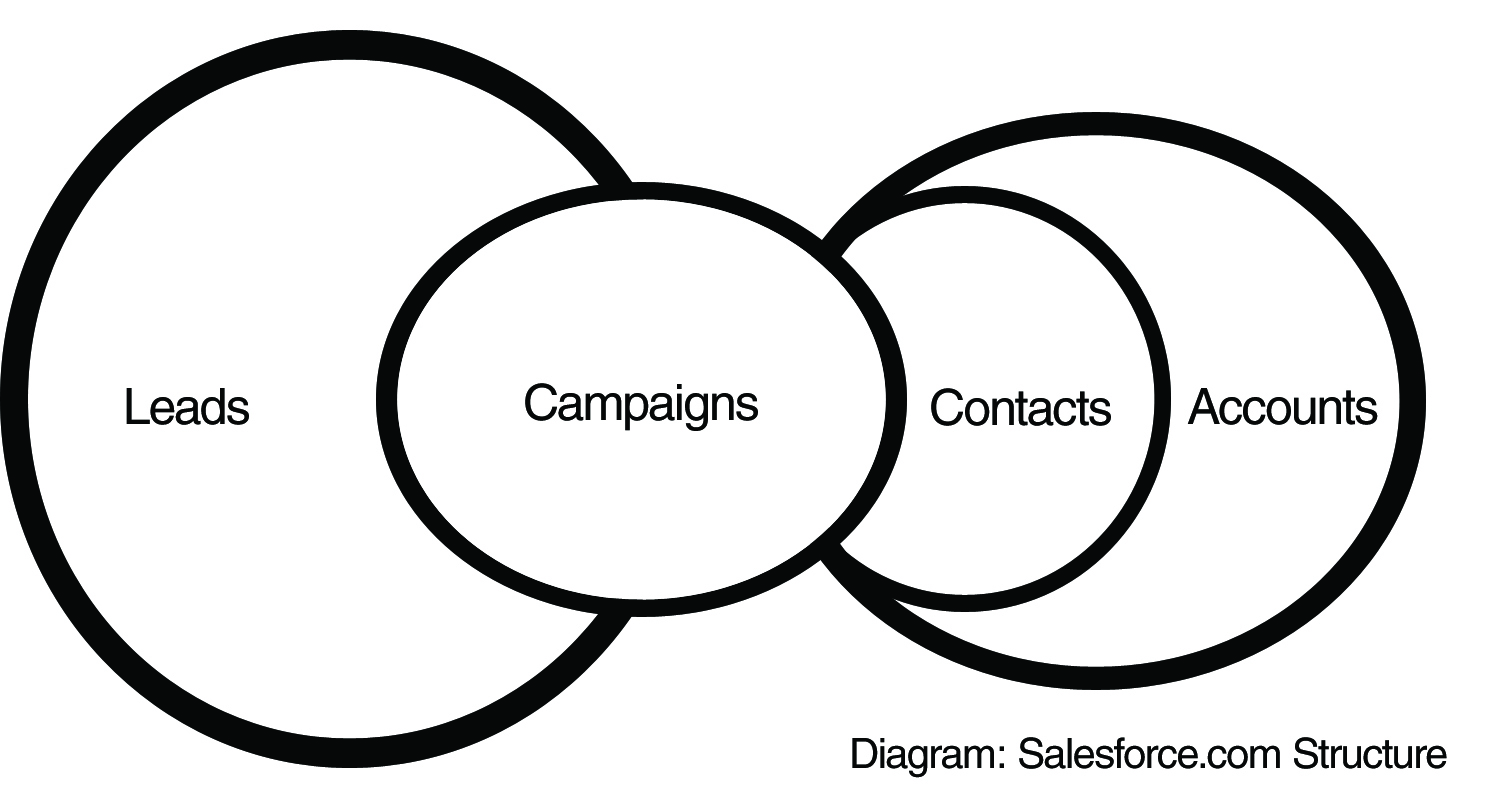
Salesforce Leads vs. Campaigns vs. Contacts vs. Accounts
Showing how record types overlap in Salesforce.com

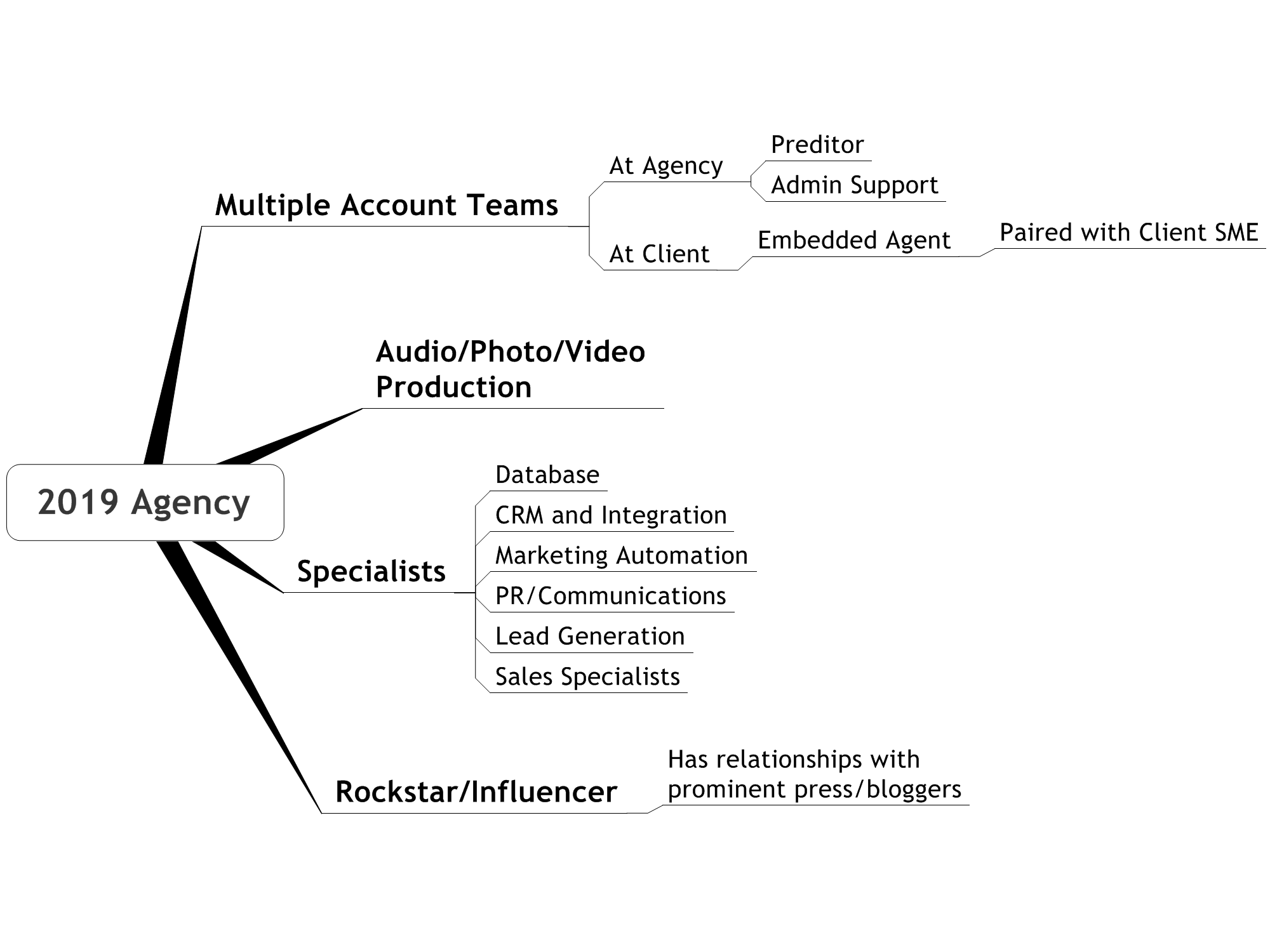
2019-agency

Some predictions on tactics agencies might take up by 2019. Some hits, some misses.

taguchi

Results from a multi-variate, or Taguchi test, although calling it Taguchi seems to be less popular.

Categories
Productivity Booster

Compliance by Design

While doing some product marketing research about 3 years ago I came across the idea of compliance by design. Instead of creating tasks for your users as part of your product (fill out the activity report at the end of the week) you build the product or process so that there’s no way the user can avoid it. In the activity report example a solution would be sending out all assignments via Salesforce.com and then you could monitor and report on activities without the user having to do anything beyond the job itself.

This can be even more useful in products, having parts that only fit together in the correct configuration, making it impossible to assemble incorrectly. Superior design means no errors during assembly, no expense from failure due to improperly assembled products, and no support costs during assembly or during use of an improperly assembled product.

Categories
Productivity Booster

Gamification

Over the last 3 weeks I’ve had 2 trips to San Francisco, one for Cloudforce and the other for Sales 2.0. At both of these events I heard the hype surrounding Gamification – adding game play elements to your business process. At Cloudforce Mark Benioff was talking about their acquisition of Rypple. In addition to whatever employee review/feedback  system you have you give employees the ability to award badges to each other that show up in the user’s profile (in this case in Salesforce.com).

The central idea to gamification is that people will spend hours on end chasing digital trinkets, and this seems obvious based on the success of things like Farmville, Foursquare, or sticker chasing on Get Glue. While researching yesterday I came across a great post (worth the read) claiming that gamification is BS, and while the argument has merit, that doesn’t mean it won’t work. As a friend of mine experienced in motivating sales people has said regarding their competitive nature: “I’ve seen them get in a fist fight over a bag of M&M’s”

After hearing about Rypple I came across a wide assortment of companies providing game functionality to the sales cycle such as ePrize, BunchballBadgeville and Hoopla (I have to admit, their ESPN style leaderboard eye candy is very cool). It will be interesting to see how many of these companies show up at Dreamforce this year. I’d go on about how well these tools can shape behavior, but the fact that I spend time checking in to 5 Guys Burgers and Fries so that I can continue to be the Foursquare Mayor is proof enough.

Categories
Productivity Booster

Guide for New Dads

A friend heard me talking about books for new Dads and asked for a recommendation. Again I saw the opportunity for a blog post, thanks to the magic of the interwebs I can share this information with millions, even though I am only one child away from being entirely unqualified to write about this.

Unfortunately either he was thinking of someone else, he got it wrong, or I was blabbering in some state of sleep deprivation (all quite possible). I read a number of books. They were all crap. I could have written them. That should tell you something.

And so without further ado, my Guide for New Dads:

  1. Never drop the baby. Ever.
  2. Bath time is inherently dangerous, buy protective stuff and see rule 1.
  3. Don’t worry about the baby, take care of Mom and everything else takes care of itself.
  4. Do some cooking and cleaning you lazy bum.
  5. If you do 3 and 4 she will let you sleep more, this is all that matters in your life.
  6. Have your own baby time when you can have fun and let Mom sleep, this reduces the chance of Mom accidentally/intentionally killing you.
  7. Dirty diaper containment systems/furnaces/hermetic sealing systems are overkill for year 1

In all seriousness though, it’s both amazing and overwhelming. I was having a tough time dealing around six months and found inspiration in these words from a man called Warrior:

“A father does it ALL — and he never once whines or complains about being blessed with the privilege and honor to do so. He doesn’t try to find a way out or around. He wakes each day and simply handles whatever it is that is going on in his life.”

Last week I read an article where a reporter asked Steve Jobs about having kids, he said it was “10,000 times better than anything I’ve ever done”. Congratulations and enjoy the ride! I have to get back to work…


Categories
Productivity Booster

Third and Three

The third quarter has elapsed and year end is in sight. Here’s the scorecard as it stands:

On the Family front I took a hit by not taking a summer vacation. Between starting a new job, juggling the finances and trips back to the Berkshires it wasn’t in the cards this year. I’m also behind on the College Fund, but we have some plans underway to straighten out the cash flow situation that are moving forward.

On target on the Personal front, getting coached on running has paid huge dividends, live music was a big part of the summer, and I am actually in decent shape. I’ve given up on a specific weight number because I have been lifting a lot more and have been gaining weight while losing inches. As long as I see some semblance of abs and my clothes fit, I score that as accomplished. Q4 is a huge challenge to face though, the one-two punch of crappy weather and holiday food makes this the tough one, but the good news is I am ready to go this year instead of being behind.

Financial goals are actually in decent shape thanks to the sleazy practice of keeping the college fund over in the family goals, really nothing to do for this in Q4 but try and control spending enough to save a bit.

Professional is in good shape with work going well and my first draft of a book done. Marketing Over Coffee is still growing but pretty slowly, it takes a back seat to work and the book but it’s much better than a hobby that burns cash.

That’s about it, on to the rest of the year. I hope your Q4 goes well.